
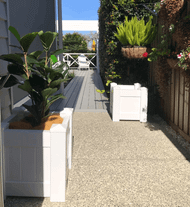
Using PVC Planter Boxes For Hassle-Free Garden Design Transformation
Posted by Lee Benson on 31st Aug 2026
Sometimes when it comes to a garden transformation, the simplest changes have the biggest impact. One of those is the humble planter box. PVC planter boxes can introduce structure, colour and greenery without requiring major changes to the existing garden. They can define spaces, disguise tired areas, create privacy and make even a relatively small outdoor space feel deliberately designed. Better still, they offer a practical option for homeowners who want an attractive garden without signing themselves up for endless maintenance.
Why Planter Boxes Work So Well in Modern Gardens
Traditional garden beds can take a little time and muscle to prepare and maintain. They require digging, edging, retaining walls and plenty of preparation. Large raised planter boxes provide a much easier alternative. Because they are raised and contained, they can be positioned almost anywhere. Place them along a boundary, beside an entrance, around an entertaining area or on a patio to introduce greenery where planting directly into the ground isn't practical.
PVC is especially useful for this purpose because it can provide a clean, consistent appearance that works with contemporary homes. It also pairs naturally with other outdoor materials, including PVC fencing, timber, brick, concrete and metal. You should also refrain from viewing plastic planter boxes as individual containers, and try to think about them as architectural elements. A row of matching boxes can create repetition and rhythm, while different sizes can be used to establish visual layers.
Create Structure Without a Major Renovation
Planter boxes have a unique ability to change the layout of a garden without changing the garden itself. A long planter box can divide an entertaining space from the rest of the yard. Several smaller boxes can define a pathway or entrance. Taller planting can even create screening between neighbours without requiring a large boundary project.
Outdoor planter boxes can be especially useful when your existing garden fencing is functional but visually uninspiring. Rather than immediately replacing the entire boundary, greenery can soften it and introduce another layer of texture. You can also use plastic planter boxes to disguise areas that are difficult to landscape traditionally. An awkward corner, paved section or unused side passage can quickly become a dedicated planting zone.
Choose Plants That Suit the Space
Of course, the planter box is only half the equation. What you put inside it will ultimately determine how the finished garden looks. Think about sunlight, wind exposure, available space and how much watering you realistically want to do. There is little point creating a lush tropical display if the area receives blazing afternoon sun and you're unlikely to water it regularly.
This is where some knowledge about designing with garden plants comes in handy. Consider height, texture, colour and growth habits rather than simply choosing plants you like individually. Try combining taller plants at the back with medium-height foliage and trailing varieties around the edges. This creates depth and prevents the planter from looking like a collection of unrelated plants.
For an Australian garden, native species can also be an excellent choice. Grasses, shrubs and flowering natives can provide colour and texture while connecting the garden with its surroundings. A thoughtfully planned Australian native garden can also create a strong sense of place. A basic garden design budgeting exercise can help you decide where to spend and where to save when it comes to the plants. You might invest in durable garden planter boxes and use more affordable plants initially, then add additional species as the garden develops.
Use Garden Planter Boxes to Frame Outdoor Areas
Next, think about creating visual boundaries. You might not want a solid wall separating the entertaining area from the lawn, but you may still want the spaces to feel distinct. Plastic planter boxes can provide that separation without making the garden feel enclosed. For example, a series of rectangular boxes filled with structured greenery can frame an outdoor dining area. Lower boxes can establish a subtle boundary, while taller planting can provide additional privacy.
This approach can work well alongside contemporary fencing like aluminium batten fencing or alongside stylish features. Clean lines from an aluminium slat fence can be softened by organic planting, creating a balance between hard landscaping and greenery.
Give Your Front Yard More Personality
Outdoor planter boxes work just as well at the front of a property. A well-positioned planter can completely change the appearance of a home's entrance. Use them beside the front door, along a pathway or around the driveway to introduce greenery and create a more welcoming arrival. When considering your fencing front yard fence ideas, don't overlook the role planting can play. A simple boundary can look far more sophisticated when paired with thoughtfully positioned greenery.
For homes with traditional architecture, large planter boxes can also work alongside white picket fencing to create a classic garden aesthetic. For contemporary homes, geometric boxes and architectural plants can produce a much cleaner look. The important thing is proportion. Oversized planters can overwhelm a narrow frontage, while tiny boxes may disappear against a large façade.
Build Around Your Garden's Existing Style
Your garden planter boxes should feel like part of the garden rather than random additions.
If your property already has a defined aesthetic, use it as your starting point. A relaxed coastal garden design, for instance, might benefit from weathered textures, grasses and softer planting, while a minimalist garden could use symmetrical boxes and carefully controlled greenery.
Exploring common garden styles can help you identify what appeals to you, but don't feel restricted to one particular category. Combining influences can produce a much more individual result. The same principle applies to materials. If your home already uses strong geometric forms, repeat those shapes in your planters. If the architecture is softer and more traditional, rounded planting and natural textures may create a better connection.
Keep Maintenance Under Control
The whole point of a hassle-free garden transformation is, well, keeping it hassle-free. Choose plants that are suited to your climate and the conditions of the specific planting area. Grouping plants with similar watering requirements can make maintenance easier, while mulching can help retain moisture and reduce weed growth. Large planter boxes can also make maintenance more manageable because the planting area is contained. You're not trying to manage an entire garden bed that has slowly developed a personality of its own.
For homeowners who want an attractive outdoor space without constant upkeep, this approach fits naturally with low-maintenance garden design. It's still worth scheduling regular maintenance, though. A simple cleaning checklist for your garden can help you stay on top of leaves, debris, weeds and general tidying before small jobs become weekend-consuming projects.
Key Takeaways
The beauty of PVC planter boxes is their versatility. They can add greenery to paved spaces, create privacy, define zones and introduce structure without requiring a complete garden overhaul. They can also complement existing fencing, soften hard architectural lines and give otherwise overlooked areas a clear purpose. Thoughtful planting and boundary improvements can even help boost the value of your rural property by making the outdoor environment feel more polished and usable.
Sometimes, a few well-placed raised planter boxes, the right plants and a little planning are enough to give your outdoor space an entirely new personality. And unlike a major landscaping project, you can build on the transformation over time, one planter box at a time.